Investor guide · hidden costs
Best assets to rent out, and the four costs people forget.
The best assets to rent out are not the ones with the highest price on the board. They are the ones that still earn after four costs most buyers skip: empty hours, insurance, depreciation and booking commission. This guide applies those four costs to scooters, jet skis, a road supercar and a charter yacht using sourced figures, then runs a jet car through the same test with the numbers from our own model.
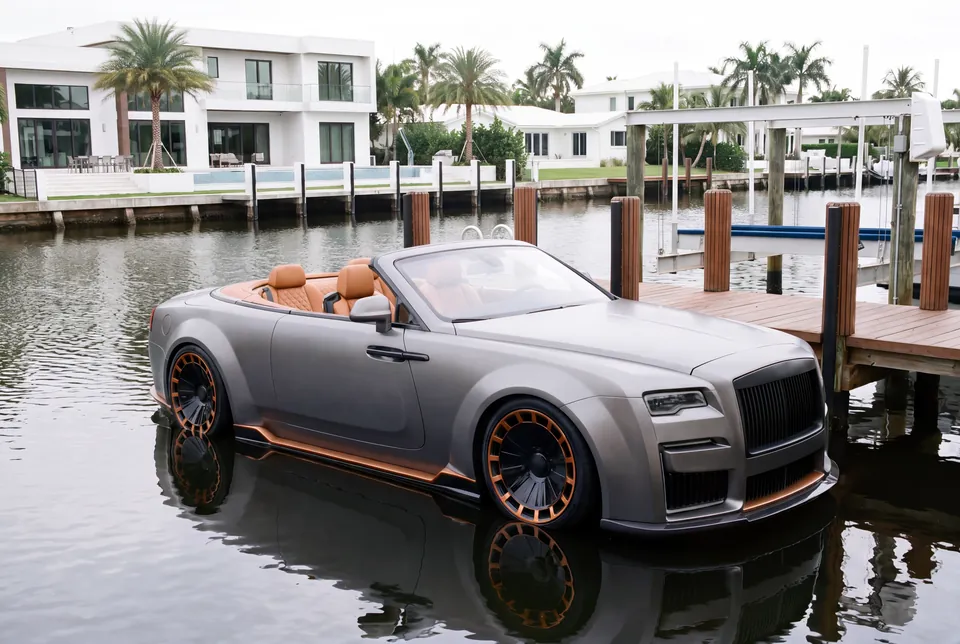
Why the rental board is the wrong place to start.
Search for things to rent out for profit and you get lists ranked by daily rate: a supercar above a jet ski above a scooter. A daily rate is gross income on a day the asset is booked. Four costs stand between that figure and what you keep, and sellers of rental assets rarely print any of them.
- Utilisation: the hours and days nobody books.
- Insurance: cover that allows paid rental, priced apart from private cover.
- Depreciation: what the asset loses between purchase and resale.
- Commission: the share taken by the platform, hotel desk or agent that brings the customer.
Any list of the best assets to rent out should be read through these four. Below, each is applied to assets where a public figure exists. Where our research found none, we say so. A jet car, the asset we sell, comes last and gets the same treatment.
Cost one: utilisation, the hours nobody books.
No rental asset is busy all the time, and the gap is wider than buyers assume. One jet ski planning guide works with utilisation of 30–70% of available hours (qoreups). That range alone moves income by more than a factor of two.
Our own estimate for a Bali scooter on monthly rental assumes 70% occupancy. At that rate a Honda Scoopy bought for about USD 1,400 and rented from IDR 1.3 million a month grosses roughly 46% of its purchase price a year, before any cost (prices from Gridoto and nashaplaneta). At 50% occupancy the same arithmetic gives about a third.
Season and shocks move utilisation more than marketing does. On our estimate the Gulf season runs from October to May and a Mediterranean season lasts 100–150 days. Dubai hotel occupancy fell from 84.8% in January–February 2026 to 22.8% in the week to 14 March, and stood at 66% in August (HVS; The National). An asset bought on January's numbers met March's.
Cost two: insurance that allows paid rental.
The same planning guide puts insurance for a jet ski rental at USD 2,000–5,000 or more per year, with maintenance at USD 500–1,000 per ski. A new jet ski costs USD 7,000–22,600 (JetDrift), and a rental-grade one about USD 12,000–16,000 on our estimate. The yearly premium alone can equal an eighth of the purchase price at the low end and far more at the high end.
For scooters, shared cars and road supercars our research found no reliable public data on commercial premiums. Ask a broker before you ask a dealer, and ask for the excess after a total loss. For charter yachts the sources give one total instead: running costs of 10–15% of the purchase value every year (BOAT International, The Luxury Playbook, Practical Sailor).
Cost three: depreciation, the bill that arrives at resale.
Depreciation never appears in a rental seller's payback figure, and it is often the largest cost. A rental asset is used harder than a private one and sold with a rental history.
For scooters, jet skis and supercars we found no sourced resale data, and the yacht sources do not quote a figure. The cost exists anyway. You can measure it yourself in an hour: find three used listings for the same model at the age you plan to sell, and write down the gap to the new price. Listings are asking prices, not sales, so treat the gap as a minimum. The one asset for which we hold public listings is the jet car; they are in the jet car section below.
Cost four: the commission on every booking.
Customers rarely come to you directly. Booking platforms and hotel concierge desks typically take 20–30% of the ticket; that is the working assumption in our own model. Yachts pay the same toll under another name: a charter agent or manager takes 15–20% of every fee, as the yacht charter guide shows.
Selling direct is not free either. It moves the cost to marketing and to the person who answers enquiries. A plan with no commission line and no marketing line has simply left the customer out.
Most profitable things to rent out: the four costs across five assets.
| Asset | Utilisation | Insurance | Depreciation evidence | Commission |
|---|---|---|---|---|
| Scooter (Bali) | 70% assumed in our estimate | No reliable public data | No reliable public data | No reliable public data |
| Jet ski | 30–70% (planning guide) | USD 2,000–5,000 or more a year | No reliable public data | No reliable public data |
| Road supercar (Dubai) | No reliable public data | No reliable public data | No reliable public data | No reliable public data |
| Charter yacht | Not quoted; gross income 8–15% of value a year | Inside running costs of 10–15% of value a year | Not quoted | Agent 15–20% of each charter fee |
| Jet car | 1–3 booked hours per operating day in city markets (our estimate) | USD 4,000–9,000 a year by market (our estimate) | Used listings: AED 60,000 in Abu Dhabi; USD 33,000–65,000 in Florida against USD 58,000–82,000 new | About 25% on bookings sold through platforms and hotel desks (our estimate) |
Sources: qoreups (jet ski planning ranges); Gridoto and nashaplaneta (scooter price and rent behind our estimate); The Luxury Playbook, BOAT International and Practical Sailor (yachts); OpenSooq and broker listings on boats.com, November 2026 (used jet cars). Cells marked ‘our estimate’ come from our own model.
The four costs added up: a jet ski, a yacht, a supercar.
Jet ski. The planning guide's own margin is 20–30%, which means 70–80% of gross income goes on costs in its model. Its gross figure of USD 45,000–75,000 per ski over a 150-day season is a model output, not an audited result. More in jet ski rental business profit.
Charter yacht. Gross income of 8–15% of value meets running costs of 10–15% and an agent's 15–20% of each fee. The published net is 2–8% and often 2–4%. On a yacht the four costs take almost everything.
Road supercar. Day rates in Dubai are AED 2,500–6,500 (Rihlat). None of the four costs is sourced, and the one return figure we found, 16–20% a year on a fleet programme, is an unaudited vendor claim.
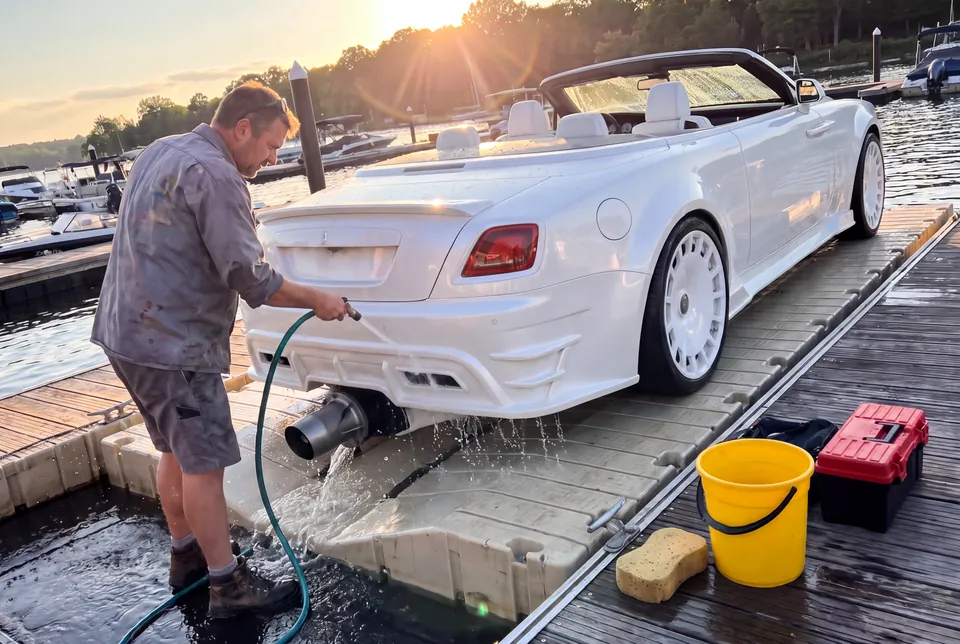
A jet car through all four costs: Dubai base case.
One stand-alone craft, illustrative and not a forecast: USD 380 per booked hour, 1.75 booked hours a day, 280 operating days.
| Line | Per year | Forgotten cost it belongs to |
|---|---|---|
| Revenue | USD 186,200 | Utilisation: 490 booked hours |
| Fuel for the craft and the escort jet ski | USD 15,190 | – |
| Maintenance reserve | USD 5,930 | – |
| Crew | USD 30,000 | Utilisation: paid whether booked or not |
| Berth | USD 12,000 | Utilisation: paid whether booked or not |
| Insurance | USD 4,000 | Insurance |
| Licence and registration | USD 2,000 | – |
| Booking commissions, 25% on half of sales | USD 23,275 | Commission |
| Marketing and card fees | USD 13,965 | Commission |
| Other | USD 3,000 | – |
| Operating costs | USD 109,360 | – |
| Operating result before depreciation | USD 76,840 | – |
| Depreciation at 22% of craft cost | about USD 11,000 | Depreciation |
| Outlay: craft plus set-up | USD 72,000 | Payback about 11 months |
Our own illustrative scenario, built from rental prices listed publicly in November 2026 and our cost assumptions. Not a forecast. Weak case: USD 270 per booked hour, 1.0 hour a day and 250 days give revenue of USD 67,500 against costs of USD 76,500, a loss with no payback.
What the jet car numbers mean.
We sell the R series, built in the United Arab Emirates: USD 24,490 to USD 28,990 for the craft without engine and about USD 50,000 complete, per the builder's catalogue (price page). Operators list AED 750–1,200 (about USD 204–327) for 30 minutes, yet a booked hour realises USD 270–500 per booked hour on our reading, because guests buy short slots and nobody pays the slot rate for sixty minutes.
Depreciation is steep, and the evidence is public. A used jet car was listed in Abu Dhabi at AED 60,000, about USD 16,300 (OpenSooq). Used craft in Florida are listed at USD 33,000–65,000 against USD 58,000–82,000 new (boats.com). Our model therefore writes off 22% of the craft's cost a year and states it apart from the operating result.
Across markets the base-case payback is 11–20 months. In the weak case a stand-alone craft never pays back. Break-even is about one sold hour per operating day. Added to a fleet that already pays crew, berth and permit, costs fall to USD 40,000–145,000 a year and the Dubai base payback to about 6 months; see jet cars for rental operators.
Against a jet ski the honest comparison is this. The craft costs three to four times as much and its ride sells for two to three times the ticket, so revenue per dollar invested is about equal. The jet car earns more per berth, per guide and per permit. It is an operating business with staff, not an asset that pays while you sleep. Test your inputs in the ROI calculator; the rental business page goes through every line.
Best assets to rent out: eight checks before you buy.
- Three local operators publish a price for the same rental, and you have seen all three.
- You know the booked hours or days per year the plan needs, and what happens at half of that.
- A broker has quoted insurance that names paid rental.
- You have found used listings for the same asset and written down the gap to new.
- You know which platforms or desks will sell it and what share they take.
- The scarce input (berth, permit, concession or parking) is yours in writing.
- A named person runs the asset daily, and their pay is in the plan.
- The plan states the season length and what the asset does out of season.
Questions buyers ask on WhatsApp
What are the most profitable things to rent out?
There is no audited ranking. Assets with sourced figures show how much the four costs remove: charter yachts gross 8–15% of value a year and net 2–8%, often 2–4%. For most other assets there is no reliable public data. Nine assets are set side by side in rental business ideas.
What can I buy to rent out to make money with USD 50,000?
About thirty-five scooters, three or four jet skis or one complete jet car. Each needs an operator, a location and insurance, and none earns without daily work. How to invest 50k for passive income covers the owner–operator route.
What is the most profitable equipment to rent?
Our research covers leisure assets: scooters, cars, jet skis, yachts and jet cars. We hold no sourced figures for construction, event or camera equipment, so we publish none. The four-cost test applies to any of them; for prices of one leisure asset see the jet ski price guide.
How fast does a jet car lose value?
Our model assumes 22% of the craft's cost per year. The evidence is a used listing at AED 60,000 in Abu Dhabi and used Florida craft at USD 33,000–65,000 against USD 58,000–82,000 new. Prices for new craft are on the price page.
How much do booking platforms take from a rental business?
We assume 20–30% on bookings that come through platforms and hotel desks, and apply 25% to half of sales in the Dubai model. Yacht charter agents take 15–20% of each fee. You can test other inputs in the ROI calculator.
Is a jet car one of the best assets to rent out in Dubai in 2026?
Only with a berth, a permit and a plan that survives the weak row. Dubai received 6.97 million visitors in January–August 2026 against 19.59 million in all of 2025 (The National). The Dubai page has the local picture.
Read next
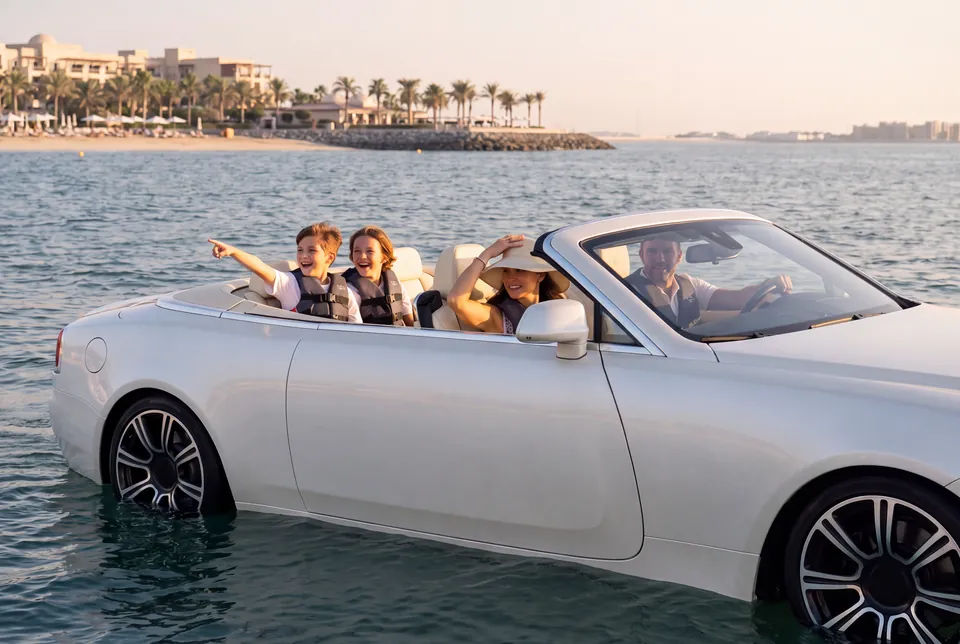
Rental business ideas
Rental business ideas for USD 25–100k: nine assets from scooters to a jet car, with sourced prices, rents and limits. Ask for the numbers on WhatsApp.

Invest 50k: rental reality
How to invest 50k for passive income: why a rental asset is an operating business, and what a 50/50 owner–operator split does to payback. WhatsApp us.
ROI calculator
Jet car rental business calculator: set price per booked hour, sold hours and days, and see revenue, costs and payback for one craft. Send it on WhatsApp.